


Nirjala Ekadashi 2026: Date, Vrat Rules, Bhima Katha and the Meaning of the Waterless Fast
Discover Nirjala Ekadashi 2026 date, tithi timings, Bhima katha, fasting rules, mantra and what this sacred waterless fast truly means.
What is Nirjala Ekadashi?
Nirjala Ekadashi is observed during the Shukla Paksha of Jyeshtha month.
The word Nirjala means:
- Nir = without
- Jala = water
This means the vrat is traditionally observed without:
- food
- water
- indulgence
- distraction
Among all Ekadashis, this is considered one of the most intense.
Nirjala Ekadashi 2026 Date and Timings
For India (Delhi timing):
- Ekadashi Date: June 25, 2026 (Thursday)
- Ekadashi Tithi Begins: 06:12 PM on Jun 24, 2026
- Ekadashi Tithi Ends: 08:09 PM on Jun 25, 2026
- Parana Time: 05:26 AM to 08:14 AM On Jun 26, 2026
Timing has a subtle role in Vedic practices.
For those who prefer aligning rituals precisely, checking accurate daily timings through a detailed panchang brings structure and consistency to the practice.
Nirjala Ekadashi Vrat Katha
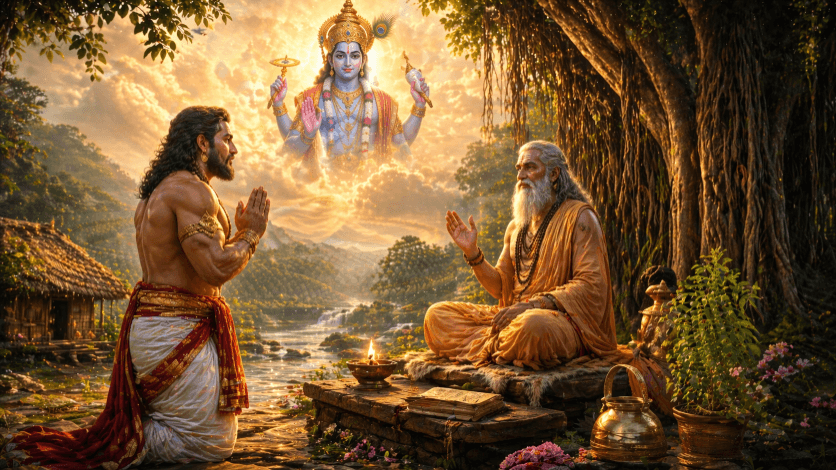
The most well-known Nirjala Ekadashi story comes from the Mahabharata period.
Among the five Pandavas, Bhima was known for immense strength.
He could face warriors in battle, but he found one thing difficult - fasting.
His mother Kunti, his brothers, and Draupadi regularly observed every Ekadashi.
Bhima respected the practice, but his strong digestive fire made it almost impossible for him to stay hungry.
One day he approached Maharishi Vyasa and said:
“Revered sage, the body can endure war, but it struggles to endure hunger. Is there one Ekadashi that can offer the merit of all the others?”
Vyasa understood Bhima’s honesty.
Instead of criticizing him, he gave a practical path.
He said that if Bhima could observe one Ekadashi in a year without food and even without water, with complete devotion to Lord Vishnu, he could receive the spiritual benefit of all twenty-four Ekadashis.
That Ekadashi was Nirjala Ekadashi.
Bhima accepted the challenge.
On that sacred day, he remained:
- without food
- without water
- focused on Lord Vishnu
- and steady in prayer
By sunset, the struggle had become inner purification.
Because Bhima first observed this difficult vrat, Nirjala Ekadashi is also called:
Bhimseni Ekadashi
What the Katha Really Means
The story is not simply about avoiding food.
It reveals something deeper.
Bhima was physically powerful, yet he still had one weakness.
That makes this katha deeply human.
Every person carries strength in one area and struggle in another.
Nirjala Ekadashi teaches that spiritual growth often begins where comfort ends.
Why This Ekadashi Is Considered So Powerful
Traditional belief says:
One sincere Nirjala Ekadashi can carry the spiritual merit of multiple Ekadashi fasts.
The deeper meaning is not mathematical.
It reflects one idea:
A single day of complete awareness can change more than many days of half-hearted practice.
Bhima's Nirjala Ekadashi Katha
The story behind this vrat comes from the Mahabharata tradition.
Bhima, the strongest Pandava, found fasting difficult.
Unlike Yudhishthira and Arjuna, he could not remain without food.
So he asked Sage Vyasa:
“Is there one Ekadashi that can give the fruit of all the others?”
Vyasa advised him to observe Nirjala Ekadashi once a year with complete devotion.
Bhima accepted.
He observed the fast without food or water.
That is why Nirjala Ekadashi is also known as:
Bhimseni Ekadashi
The Hidden Meaning Behind the Story
Bhima was physically strong.
Yet his challenge was not strength.
It was self-control.
That makes this story timeless.
Even today, many people can manage work pressure but struggle with inner restlessness.
Nirjala Ekadashi quietly teaches:
external strength and inner discipline are not the same.
Fasting Rules - What to Eat and What Not to Eat
Traditional Rule
Strict observance means:
- no food
- no water
If Full Nirjala Is Not Possible
Some people choose a softer version:
- fruits
- milk
- coconut water after sunset only if necessary
Health should always come before ritual severity.
Foods to Avoid
- Rice
- Wheat
- Lentils
- Onion
- Garlic
- Heavy fried food
Those curious about the deeper ritual meaning often ask why food restrictions matter, especially why rice is avoided on Ekadashi and how it connects to fasting discipline.
Nirjala Ekadashi Mantra
"ॐ नमो भगवते वासुदेवाय"
(Om Namo Bhagavate Vasudevaya)
This is the most widely chanted Vishnu mantra for Ekadashi.
How to Chant the Mantra
Simple Method
- Wake before sunrise
- Take a bath
- Wear clean light-coloured clothes
- Sit facing east
- Light a diya
- Offer tulsi leaves
- Chant 108 times
Best Time to Chant
- Morning after puja
- Evening before aarti
- Before sleep for mental calm
What to Do on Nirjala Ekadashi
- Read Vishnu Sahasranama
- Donate water or fruits next day
- Practice silence for some time
- Stay calm in speech
- Spend less time on phone
What to Avoid
- Anger
- Gossip
- Oversleeping
- Arguments
- Heavy physical exertion
A Practical Modern Meaning
For a person handling:
- office stress
- family pressure
- financial uncertainty
Nirjala Ekadashi can become more than a ritual.
It can become a reset.
Even one mindful day can reveal how scattered the mind usually stays.
A Helpful Spiritual Connection
The deeper psychology of fasting becomes easier to understand when compared with how Varuthini Ekadashi focuses on karmic refinement rather than external ritual alone
That connection often helps the larger Ekadashi cycle make more sense.
FAQs
Can water be taken in Nirjala Ekadashi?
Traditionally no, but health conditions should always be respected.
Can beginners observe Nirjala Ekadashi?
Yes, with a modified fruit fast if needed.
Why is it called Bhimseni Ekadashi?
Because Bhima first observed this vrat after Sage Vyasa's guidance.
Can tea or coffee be taken?
Traditionally avoided.
Which deity is worshipped?
Lord Vishnu.
Can working people keep this fast?
Yes, but many choose a lighter version for practicality.
Tags: