


Baisakhi 2026: Astrological Significance of the Sun Entering Aries & What It Means for Your Zodiac
Baisakhi 2026 is not just a harvest festival — the Sun's entry into Aries marks the astrological new year, and it affects every zodiac sign differently.
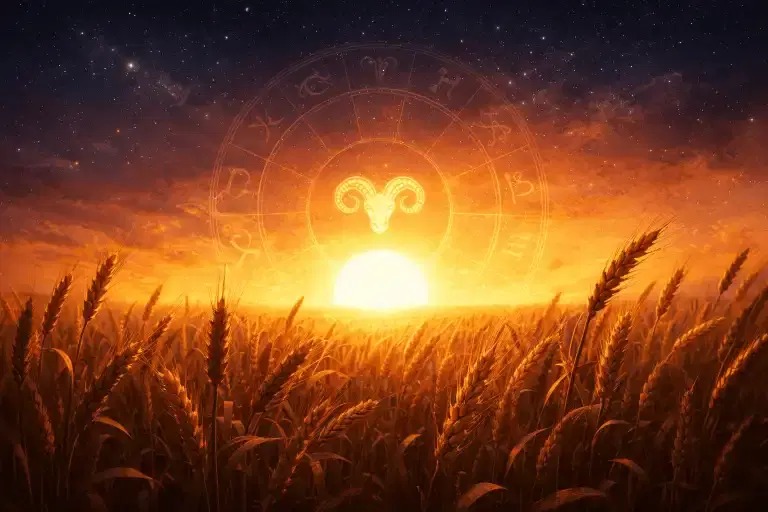
Baisakhi 2026 and the Sun's Entry into Aries: What Is Actually Happening in the Sky
Baisakhi 2026 falls on April 14 — and while most people associate it with golden wheat fields, bhangra and new harvest, the astronomical event behind it is rarely discussed. The Sun moves into Aries (Mesh Rashi) on this date, triggering what Vedic astrology calls Mesh Sankranti (the solar ingress into the first zodiac sign). This is not just a seasonal marker. In Jyotish (Vedic astrology), it is the beginning of the solar year itself.
The reason Baisakhi falls on April 13 or 14 every year — with almost clockwork precision — is precisely because it tracks the Sun's position, not the Moon's. Unlike most Indian festivals that shift dates annually due to the lunar calendar, Baisakhi is solar-fixed. That stability is intentional, and it carries deep astrological weight.
According to Surya Siddhanta, one of the oldest astronomical texts in the Vedic tradition, the Sun's entry into Mesh (Aries) signals the commencement of a new cosmic cycle. The year does not begin in January for the planets. It begins here.
Why the Sun in Aries Is Considered the Most Powerful Solar Position
The Sun entering Aries is not just symbolically significant — it is astronomically precise and astrologically potent.
In Vedic astrology, the Sun is exalted (uccha) in Aries, specifically reaching peak exaltation at 10 degrees of Mesh Rashi. Exaltation means the planet functions at its highest potential in that sign. A government officer transferred to their ideal posting, working in full capacity — that is the metaphor classical texts use. The Sun's exaltation in Aries means solar energy, leadership, clarity and vitality are at their annual peak.
What Exaltation Actually Means — and What It Does Not
A common misreading is that "Sun exalted = everyone's life goes well." That is not how it works.
The Sun's exaltation affects the house it transits in your individual birth chart. A person with Libra (Tula) as their ascendant (lagna) will have this exalted Sun transiting their 7th house — the house of partnerships and marriage. That brings both intensity and illumination in relationships, not automatic joy. The energy is strong; how it manifests depends entirely on the natal chart.
Brihat Parashara Hora Shastra (BPHS), the foundational classical text of Vedic astrology, is clear that planetary strength must always be read in the context of the individual horoscope. Strength amplifies — it does not guarantee outcome.
The Astrological New Year No One Talks About
Most Indians celebrate Hindu New Year on Ugadi, Gudi Padwa or Chaitra Shukla Pratipada — all of which fall within the same fortnight as Baisakhi. There is a reason for this clustering.
The Moon-based calendars place the new year at the new moon of Chaitra month. The Sun-based calendar places it at Mesh Sankranti. Both are tracking the same cosmic reset — the return of solar energy to its starting position in the zodiac.
What makes Baisakhi unique is that agricultural communities in northern India built their entire year around this solar event. The harvest ready to cut, the soil ready to rest, the cycle complete. Vedic astronomy and farming tradition merged into one celebration. The sky was their calendar long before print was invented.
For those who follow daily Panchang timings and Rahu Kaal, April 14 carries an elevated importance — the Panchang for this day will show the exact moment of Sankranti, which astrologers consider significant for muhurat (auspicious timing) calculations throughout the next solar month.
How This Transit Affects Each Zodiac Sign
The Sun transits through Aries for approximately 30 days each year. During this window, every sign experiences a specific area of life coming under solar focus.
Fire Signs — Aries, Leo, Sagittarius
For Aries (Mesh) ascendants, the Sun lights up the self — identity, health and personal direction come into sharp focus. This is a period for conscious choices about one's path. Leo (Simha) ascendants receive solar energy in the 9th house of luck, higher learning and long journeys. Sagittarius (Dhanu) ascendants experience this transit through the 5th house — creativity, children and speculative thinking become lively.
Earth Signs — Taurus, Virgo, Capricorn
For Taurus (Vrishabha) ascendants, the Sun moves through the 12th house — a period of withdrawal, spiritual inquiry and release. Not a time for aggressive new ventures, but excellent for inner clarity. Virgo (Kanya) ascendants see solar energy in the 8th house, bringing transformation, research and hidden matters to the surface. Capricorn (Makar) ascendants receive this in the 4th house — home, family property and emotional roots become prominent.
Air Signs — Gemini, Libra, Aquarius
For Gemini (Mithun) ascendants, this is a 11th house transit — income, elder siblings and social networks. Networks built during this period tend to hold. Libra (Tula) ascendants receive the exalted Sun in their 7th house. Business partnerships, legal matters and committed relationships see clarity — sometimes uncomfortable clarity. Aquarius (Kumbha) ascendants experience this in the 3rd house — communication, short travel and courage.
Water Signs — Cancer, Scorpio, Pisces
For Cancer (Karka) ascendants, the Sun illuminates the 10th house of career and public status — a period where professional actions carry more visibility than usual. Scorpio (Vrishchik) ascendants receive this in the 6th house — health routines, daily discipline and workplace dynamics. A good time to begin structured habits. Pisces (Meen) ascendants see this in the 2nd house — finances, family speech and accumulated wealth.
The house-level reading is more personally accurate than any generic "Sun in Aries horoscope." For a precise reading based on your own birth chart, exploring your Kundali's house positions gives a far clearer picture of how this transit lands for you specifically.
The Myth Worth Dismantling: "Baisakhi Is Just a Punjabi Harvest Festival"
Baisakhi gets reduced in public memory to a regional celebration — bhangra, langar, wheat. It is all of that. But the reductive framing misses that Mesh Sankranti is observed across India under different names. Puthandu in Tamil Nadu, Vishu in Kerala, Bohag Bihu in Assam, Pohela Boishakh in Bengal — all of these fall within a day or two of April 14.
Every regional tradition is independently tracking the same solar event. The names change. The astronomy does not.
This is one of the clearest examples of how ancient Indian calendrical systems — which different regions developed independently — converged on the same astronomical anchor. The Sun's return to Aries is not a cultural preference. It is a planetary fact. The culture simply built meaning around what the sky was already doing.
For readers curious about how planetary positions create such consistent cultural patterns, the article on why astrology often uses symbolic language explores this connection in depth.
What the Sun's Annual Reset Offers Practically
There is a psychological dimension to this transit that deserves attention.
Vedic astrology has always blended the astronomical with the behavioural. The Sun in Aries — a sign ruled by Mars (Mangal), the planet of action and initiation — creates a natural window of solar energy meeting Martian momentum. Classical texts describe this as a period suited for beginnings: launching a new business, starting a health regimen, making a long-deferred decision.
The key nuance: this is initiation energy, not completion energy. A government officer starting a new posting does not finish all the paperwork on day one. The Sun in Aries is the signal to begin — sustained effort over the 30-day transit is what converts the planetary energy into actual result.
A practical note grounded in Jyotish: avoid beginning ventures on days when Rahu Kaal falls during the intended launch time, even in this otherwise auspicious solar period. The Sun's exaltation does not override inauspicious daily timings.
Frequently Asked Questions
Q: Why does Baisakhi fall on almost the same date every year unlike other Indian festivals? A: Baisakhi tracks the solar calendar — specifically the Sun's entry into Aries (Mesh Sankranti). Because it follows the Sun's movement rather than the Moon's, its date stays fixed around April 13 or 14 each year, making it one of the few Indian festivals with calendar-like predictability.
Q: Is the Sun actually stronger during Baisakhi 2026 in Vedic astrology? A: Yes. The Sun is exalted in Aries, meaning it functions at maximum strength in this sign. In Vedic astrology, exaltation is the highest-dignity position for a planet. The Sun's exaltation degree is 10 degrees Aries, making the days around April 14 particularly significant in Jyotish.
Q: Does the Sun entering Aries affect all zodiac signs equally? A: No. The impact depends entirely on which house Aries falls in your individual birth chart (kundali). The Sun illuminates the affairs of that specific house for approximately 30 days. A one-size-fits-all prediction for "all zodiac signs" is an oversimplification.
Q: Is Baisakhi celebrated only in Punjab astrologically? A: No. Mesh Sankranti — the same solar event behind Baisakhi — is observed across India under regional names: Puthandu (Tamil Nadu), Vishu (Kerala), Bohag Bihu (Assam), Pohela Boishakh (Bengal). Different names, same planetary moment.
Q: What is the best action to take astrologically on Baisakhi 2026? A: Vedic texts suggest this is an excellent period to begin new ventures, health routines or important conversations — not to complete them. Checking the Panchang for Rahu Kaal timing before initiating anything significant adds practical precision to the solar auspiciousness.
The Solar Year Begins Here
Baisakhi 2026 is a harvest festival, a Sikh historical commemoration and a cultural celebration — all at once. But at its astronomical core, it is the moment the Sun returns to Aries and the cosmic clock resets.
The sky was not indifferent to this date. Ancient astronomers, farmers and astrologers across the subcontinent all looked up and saw the same thing — and built their new year around it. That alignment across independent traditions is itself a kind of evidence worth sitting with.
The solar year does not begin in January. It begins on April 14.
Tags: