


Varuthini Ekadashi in April 2026: Date, Vrat Katha, Puja Vidhi, Benefits & Parana
The story of Varuthini Ekadashi teaches that no matter how difficult life becomes, sincere devotion and faith in Lord Vishnu can remove suffering and restore happiness. This vrat acts as a divine shield, guiding devotees toward prosperity, protection, and spiritual upliftment.
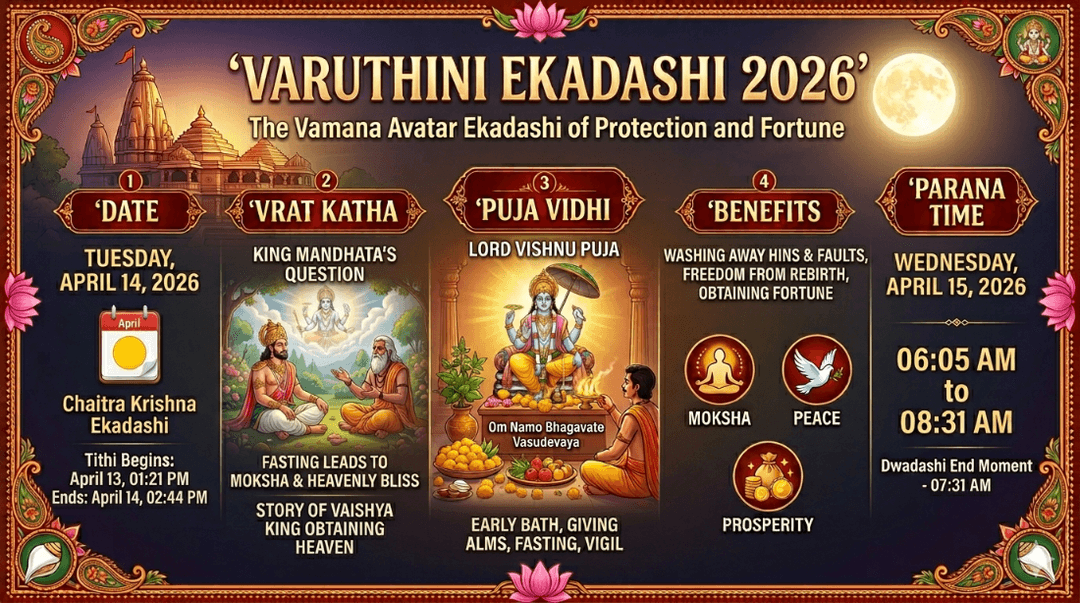
What is Varuthini Ekadashi?
Varuthini Ekadashi falls in the Krishna Paksha (waning phase of the Moon) of Vaishakh month. The word Varuthini means “protected” or “armored.”
Classical texts like the Padma Purana describe this Ekadashi as a shield. Not a reward system, but a protective layer for one’s karma.
This is important. Because the focus is not external success. It is inner stability.
Varuthini Ekadashi Vrat Katha
In ancient times, there was a noble and righteous king named King Mandhata. He ruled his kingdom with fairness, truth, and devotion. His life was filled with prosperity, respect, and divine blessings.
One day, as part of his daily routine, the king went to the forest for penance and meditation. While he was deeply absorbed in his spiritual practices, a wild bear suddenly attacked him. Despite his strength and courage, the king was unable to defend himself due to his meditative state. The bear severely injured him and bit off his leg.
The king somehow survived and returned to his kingdom, but he was deeply distressed by his physical suffering and loss. Even though he had always followed the path of dharma, he began to wonder why such misfortune had befallen him.
Seeking answers and relief, King Mandhata approached the great sage Sage Vashistha. With humility, he narrated his sorrow and asked for a way to overcome his suffering and regain his lost limb.
Sage Vashistha, through his divine insight, explained that the king was experiencing the results of past karmas. However, he assured him that there was a powerful remedy.
He advised the king to observe the sacred fast of Varuthini Ekadashi, which falls during the Krishna Paksha (waning phase of the moon) in the month of Vaishakha. The sage said that this Ekadashi is extremely powerful and can destroy sins, protect devotees from harm, and grant both worldly happiness and spiritual liberation.
Following the sage’s guidance, King Mandhata observed the fast with complete devotion, purity, and faith. He spent the day worshipping Lord Vishnu, chanting his holy names, and staying awake throughout the night in prayer.
By the divine grace of Lord Vishnu, the king was miraculously cured. Not only was his suffering removed, but his lost limb was restored. He regained his strength, health, and happiness.
Varuthini Ekadashi 2026 Date & Time
Varuthini Ekadashi falls in the Krishna Paksha of Vaishakha month.
- Date: April 13, 2026 (Monday)
- Parana (Fast Breaking): April 14, 2026 (after sunrise)
Puja Vidhi
- Wake up early and take a holy bath
- Worship Lord Vishnu with Tulsi, fruits, and incense
- Observe a fast (nirjala or falahar)
- Chant Vishnu mantras and read vrat katha
- Avoid grains, rice, and negative thoughts
Varuthini Ekadashi Benefits
- Protects from evil effects and bad luck
- Removes past sins and karmic obstacles
- Brings prosperity, success, and peace
- Grants spiritual growth and blessings
“This Ekadashi has the power to remove even the gravest sins and protect devotees from misfortune. By observing this vrat with a pure heart, you will regain your strength and prosperity.”
Fasting Rules and Foods to Eat (Ekadashi me kya khaye)
What to Eat (Falahar)
- Fruits (banana, apple, papaya)
- Milk and curd
- Sabudana (tapioca)
- Singhara flour (water chestnut)
- Dry fruits
What to Avoid
- Grains (rice, wheat, dal)
- Onion and garlic
- Non-vegetarian food
- Alcohol
The logic is simple. Light food reduces physical load. This improves mental clarity.
What to Do
- Wake up early and take a clean bath
- Worship Lord Vishnu with tulsi leaves
- Chant mantras or read Vishnu Sahasranama
- Practice silence or reduced speech
- Donate food or essentials
What NOT to Do
- Avoid anger or arguments
- Avoid excessive screen time
- Avoid gossip or negative talk
- Avoid laziness or oversleeping
A small shift that changes the day…
Fasting is not just about food. It is about behavior.
Even if someone cannot fast physically, reducing negativity itself becomes the real vrat (discipline)
Mantra for Varuthini Ekadashi
“Om Namo Bhagavate Vasudevaya”
Chanting this mantra brings mental stability. Repetition helps anchor attention, especially when the mind feels restless.
How to Chant (Step-by-Step)
1. Set a calm space
Sit in a clean, quiet place. It can be your room, a small puja corner, or even a peaceful spot at home.
No need for elaborate setup—just mental stillness matters.
2. Choose the mantra
For this Ekadashi, the most commonly used mantra is:
“Om Namo Bhagavate Vasudevaya”
3. Sit in a steady posture
- Sit cross-legged on the floor or on a chair
- Keep your back straight
- Hands can rest on your knees or hold a mala (rosary)
4. Start with slow breathing
Take 4–5 deep breaths before starting.
This helps calm the mind, which is actually more important than the chanting itself.
5. Chant with rhythm, not speed
- Say the mantra slowly and clearly
- Focus on each word
- Avoid rushing
You can chant in three ways:
- Loud (Vaikhari) → good for beginners
- Soft whisper (Upanshu) → deeper focus
- Mental chanting (Manasik) → most powerful, but needs practice
6. Use a count (optional but helpful)
- 108 times (1 mala) → ideal
- 21 or 11 times → if short on time
Consistency matters more than number.
7. Keep attention on meaning
Instead of mechanical repetition, gently hold this feeling:
- “I surrender to a higher intelligence”
- “I am seeking stability and protection”
This emotional connection is what makes chanting effective.
Best Time to Chant
- Early morning (Brahma Muhurta) → most powerful
- Evening (sunset time) → calming and grounding
If schedule is busy, even 5 minutes with full focus is enough.
Common Mistakes to Avoid
- Chanting while scrolling phone
- Rushing just to complete numbers
- Treating it like a task
Chanting is not a checklist. It is a state of mind.
FAQs
1. Can someone drink water during Varuthini Ekadashi?
Yes. Water fasting is common. Nirjala (no water) is optional and not necessary for everyone.
2. Is fasting compulsory?
No. Intention matters more than strict rules.
3. Can working people observe Ekadashi?
Yes. Even partial fasting with mindful behavior works.
4. When to break the fast?
On Dwadashi morning during the correct parana time.
5. Can tea or coffee be taken?
Ideally avoided. But light tea without grains is sometimes accepted.
6. Can we eat rice on Ekadashi?
No, rice is strictly avoided on Ekadashi. In fact, all grains like wheat, dal, and corn are not consumed during the vrat.
7. What happens if someone eats rice by mistake?
There is no need to panic. Simply continue the vrat with awareness. Ekadashi is about intention and discipline, not punishment.
8. Is sabudana allowed on Ekadashi?
Yes, sabudana is allowed because it is not considered a grain. It is commonly used in fasting meals like khichdi or khee