


Nirjala Ekadashi 2026 , Date, Time, Puja Rituals, Vrat Katha, Benefits and more
A vrat without water sounds extreme - so why is Nirjala Ekadashi still followed with such faith?
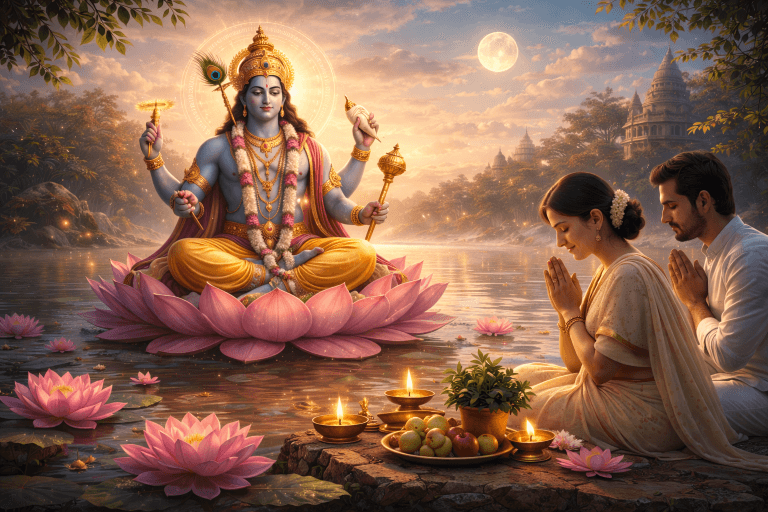
What is Nirjala Ekadashi?
Nirjala Ekadashi is considered the most intense among all Ekadashi vrats.
The word Nirjala means “without water.”
Unlike other Ekadashis where fruits or milk are allowed, this vrat is observed with complete fasting—no food, no water.
In Vedic tradition, it is believed that observing Nirjala Ekadashi once with sincerity is equivalent to observing all 24 Ekadashis in a year.
This idea is symbolic.
It reflects depth of discipline, not shortcut to results.
Nirjala Ekadashi 2026 Date and Timings
- Ekadashi Date: Thursday, June 25, 2026
- Tithi Begins -06:12 PM on Jun 24, 2026
- Tithi Ends - 08:09 PM on Jun 25, 2026
- Parana (Breaking Fast): 05:26 AM to 08:14 AM On 26th Jun
Since timing depends on precise lunar movement, checking accurate muhurat becomes essential. A quick reference through the daily Panchang for exact Ekadashi tithi and parana time helps maintain the vrat correctly.
Nirjala Ekadashi Vrat Katha
The Story of Bhima
Among the Pandavas, Bhima was known for strength—and also for his appetite.
While his brothers observed Ekadashi fasts regularly, Bhima struggled.
Fasting completely felt impossible to him.
He approached sage Vyasa and asked for a solution.
“Is there one vrat that can give the benefit of all Ekadashis?”
Vyasa advised him to observe Nirjala Ekadashi with full dedication.
Bhima accepted the challenge.
He observed the fast without food or water, focusing entirely on Lord Vishnu.
Through that single act of discipline, he aligned himself with the essence of all Ekadashis.
The Psychological Insight Hidden Here
Bhima’s story is relatable.
Not everyone can follow strict routines every time.
But sometimes, a single day of complete focus can reset the system.
That reset is what Nirjala Ekadashi represents.
Fasting Rules - What to Do and What to Avoid
Core Rule
- No food
- No water (only if health allows)
If Full Nirjala is Not Possible
Adaptation is allowed.
- Drink water if needed
- Consume fruits or milk
- Maintain mental discipline
The vrat is not about harming the body.
It is about strengthening intention.
What to Avoid
- Grains (especially rice, wheat)
- Heavy or processed food
- Excessive talking or distractions
- Negative thoughts or arguments
Mantra for Nirjala Ekadashi
"ॐ नमो भगवते वासुदेवाय"
(Om Namo Bhagavate Vasudevaya)
How to Chant
- Wake up early and bathe
- Sit in a calm place facing East
- Light a diya and offer tulsi leaves
- Use a mala if available
- Chant slowly with attention
- Minimum: 11 times
- Ideal: 108 times
Why This Mantra Matters
It centers the mind.
Instead of thinking about hunger or discomfort, the focus shifts inward.
A Subtle Link to Other Ekadashi Practices
While Nirjala Ekadashi is intense, not every Ekadashi requires this level of austerity.
Understanding the differences between vrats becomes clearer when comparing with observances like the deeper discipline-based approach seen in Varuthini Ekadashi and its focus on karmic refinement
Each vrat has its own purpose.
What Changes After Observing Nirjala Ekadashi
Not always external.
Often internal.
- Better awareness of habits
- Reduced dependency on comfort
- Stronger mental clarity
These are small shifts, but they influence long-term outcomes.
FAQs
1. Is drinking water allowed in Nirjala Ekadashi?
Traditionally no, but health comes first. Water can be taken if needed.
2. Can beginners observe Nirjala Ekadashi?
Yes, but they can start with a partial fast.
3. Can rice be eaten?
No, rice and all grains are avoided.
4. What is the main mantra?
“Om Namo Bhagavate Vasudevaya”
5. Is Nirjala Ekadashi compulsory?
No. It is optional and based on individual capacity.
6. Who should avoid strict fasting?
People with health conditions, elderly, or those on medication should avoid strict Nirjala fasting.
Tags: