


Why Your 'Weak' Planet in the Birth Chart Is Not a Life Sentence
A debilitated planet in your kundali is not a permanent curse. Classical Jyotish measures planetary strength six ways — and a single debilitation rarely means what you fear.
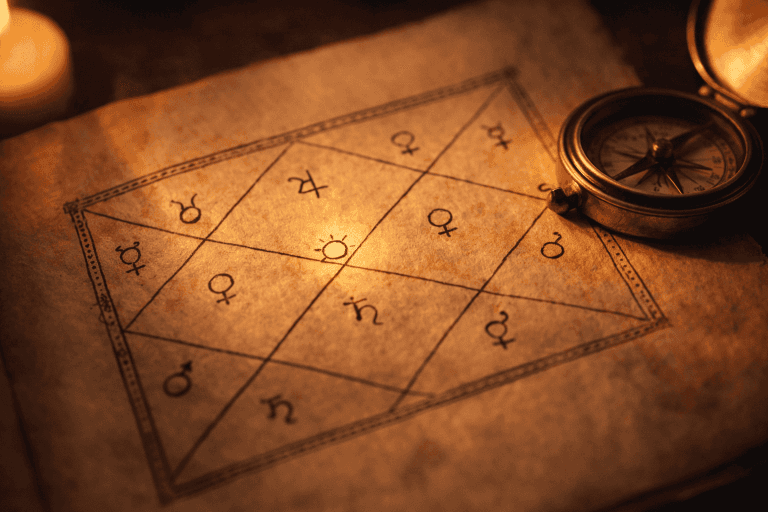
The astrologer finished scanning the chart and delivered the verdict without pause. "Your Venus is debilitated. Relationships will always be difficult for you." The person nodded and left. They had been married for twelve years. Their partnership business had just crossed its first crore.
The chart was accurate. The interpretation was not.
A weak planet in the birth chart is not a verdict. In classical Jyotish (Vedic astrology), no single planetary placement determines the shape of a life — and planetary strength itself is a six-dimensional calculation, not a label applied in a ten-minute reading.
A "weak" or debilitated planet in Jyotish does not guarantee failure in the life area it governs. The classical system of Shadbala (six-fold planetary strength) measures a planet across positional, directional, temporal and aspectual dimensions simultaneously. A planet that appears weak in one dimension is frequently compensated by strength in another — and the debilitation itself can be cancelled entirely by specific chart conditions.
What Does a "Weak Planet" Actually Mean in Jyotish?
In classical Jyotish, a debilitated planet — called a Neecha Graha (neecha meaning "low" or "fallen" in Sanskrit) — is a planet placed in its sign of deepest challenge. Each of the seven classical planets has one such sign: the Sun is debilitated in Libra, the Moon in Scorpio, Mars in Cancer, Mercury in Pisces, Jupiter in Capricorn, Venus in Virgo and Saturn in Aries. At these positions, the planet's natural qualities face the greatest resistance in expressing themselves.
This is the technical meaning. It is not the same as "this planet will ruin the relevant area of your life." The distinction matters enormously — and the classical texts are explicit about it.
According to the Brihat Parashara Hora Shastra (BPHS) — the foundational classical text of Jyotish attributed to the sage Parashara — debilitation is one of many factors affecting planetary output. The BPHS dedicates substantial attention to the cancellation of debilitation, precisely because the tradition recognised that neecha placement alone is an incomplete signal.
Shadbala — Why Planetary Strength Has Six Dimensions
The classical system for measuring a planet's true power in a chart is called Shadbala (sha meaning "six," bala meaning "strength"). The Brihat Parashara Hora Shastra describes six separate strength components that must be calculated and summed before any conclusion about a planet's effectiveness can be drawn.
These six dimensions are as follows:
- Sthana bala (positional strength) — the planet's strength based on the sign it occupies: exaltation, own sign, friendly sign or debilitation.
- Dig bala (directional strength) — strength derived from the house the planet occupies; Jupiter and Mercury gain directional strength in the 1st house, Saturn in the 7th, the Sun and Mars in the 10th, the Moon and Venus in the 4th.
- Kala bala (temporal strength) — strength based on the time of birth: day or night chart, the planetary hour, the season and the year within a larger cycle.
- Chesta bala (motional strength) — strength from the planet's speed and direction of movement; a retrograde planet gains additional chesta bala, which is why vakri (retrograde) planets are considered stronger in classical Jyotish despite their reputation in popular astrology.
- Naisargika bala (natural strength) — a fixed hierarchy among the planets themselves, with the Sun at the top and the Moon following, regardless of chart placement.
- Drik bala (aspectual strength) — strength or weakness derived from the aspects of other planets upon the planet being measured.
A planet with low Sthana bala due to debilitation may carry high Dig bala, strong Kala bala and significant Chesta bala. The net Shadbala figure — not the debilitation alone — tells the actual story. Most popular astrology skips steps two through six entirely.
Neecha Bhanga Raj Yoga — When Debilitation Becomes Exceptional
The most consequential and underreported classical concept in this conversation is Neecha Bhanga Raj Yoga — the cancellation of debilitation. Neecha Bhanga (literally "breaking of the fall") occurs when specific chart conditions counteract and reverse the debilitation of a planet. When this cancellation happens, classical Jyotish does not merely say the weakness is neutralised — it states the planet can produce results equivalent to or exceeding an exalted planet.
The BPHS outlines several conditions under which Neecha Bhanga occurs. The most commonly referenced are: the dispositor of the debilitated planet (the planet that rules the sign of debilitation) being in a kendra (angular house — 1st, 4th, 7th or 10th) from the Lagna (ascendant) or the Moon; the planet that would be exalted in the sign of debilitation being in a kendra; or the debilitated planet itself being retrograde.
The practical implication is significant. A person with Venus debilitated in Virgo may simultaneously have Mercury — which rules Virgo and is exalted in Virgo — powerfully placed in an angular house. Neecha Bhanga applies. The debilitation is cancelled. The reading that began with "your relationships will always struggle" was reading one factor and missing the correction built into the same chart.
The full birth chart (kundali) analysis that checks all house lords, cancellation conditions and dasha periods gives a more complete picture than any single placement can.
The Reading Error That Creates "Weak Planet" Anxiety
Single-factor reading is not a Jyotish method. It is a shortcut that produces confident-sounding but structurally incomplete conclusions.
Classical Jyotish has always been a system of synthesis. The planet's sign placement is assessed alongside its house position, its house lordship in the specific chart, the planets aspecting it, the dasha (planetary period) active at any given time and the Shadbala calculation. A debilitated planet ruling an important house in a chart — say, Saturn debilitated in Aries but ruling the 10th and 11th houses for an Aries ascendant — requires a completely different reading than the same Saturn in a different rising sign's chart.
The same misread pattern appears with Saturn's Sade Sati — a seven-and-a-half-year Saturn transit that has accumulated enormous cultural fear, much of it disconnected from what classical texts actually describe. The detailed examination of what Sade Sati genuinely means in Jyotish traces exactly how a multi-factor transit gets compressed into a single dread label.
The underlying psychology is consistent. Complexity is difficult to communicate in short sessions. A single alarming signal — "your Mars is weak" or "your Jupiter is debilitated" — is memorable and creates urgency. Urgency generates engagement, return visits and remedy purchases. The classical system, which asks for patient synthesis across six strength dimensions and active dasha analysis, does not compress into a sentence. So it often gets replaced by one.
Frequently Asked Questions
Q: Does a debilitated planet in my birth chart mean that area of my life will always be difficult? A: Not automatically. A debilitated planet (Neecha Graha) faces challenges in expressing its natural qualities, but the Neecha Bhanga Raj Yoga — a classical cancellation mechanism — can fully reverse this weakness. The active dasha period and the planet's Shadbala score are equally important factors in any real assessment.
Q: What is Shadbala and why does it matter for reading planetary strength? A: Shadbala is the classical Jyotish system — described in the Brihat Parashara Hora Shastra — that calculates planetary strength across six dimensions: positional, directional, temporal, motional, natural and aspectual. A planet's total Shadbala score gives a far more accurate reading than sign placement alone. A debilitated planet can still carry high Shadbala.
Q: Can a debilitated planet actually produce good results? A: Yes. When Neecha Bhanga (cancellation of debilitation) conditions are met, classical texts state the planet can produce results comparable to an exalted planet. Several well-known formulations of Neecha Bhanga are described in the BPHS and Phaladeepika, involving the placement of the sign's ruler or the planet that would be exalted there.
Q: Which planets are considered debilitated in Vedic astrology? A: Each classical planet has one sign of debilitation — the Sun in Libra, the Moon in Scorpio, Mars in Cancer, Mercury in Pisces, Jupiter in Capricorn, Venus in Virgo and Saturn in Aries. Rahu and Ketu are considered debilitated in Scorpio and Taurus respectively in some classical traditions, though this is a contested point among scholars.
Q: Is a retrograde debilitated planet stronger or weaker? A: Stronger in many classical assessments. A retrograde planet gains Chesta bala (motional strength) — one of the six Shadbala components — and the BPHS explicitly notes this. A debilitated retrograde planet therefore has a partially compensating strength factor built in, which is precisely why Chesta bala is part of the full calculation.
A Chart Is a System, Not a Sentence
Classical Jyotish was built as a diagnostic system, not a verdict machine. Every placement in a chart is a variable that interacts with every other variable — house lordships shift meaning by ascendant, dasha periods activate different parts of the chart at different life stages and Neecha Bhanga can rewrite a planet's story entirely.
The anxiety that follows a single line — "your planet is weak" — is understandable. But it is anxiety in response to an incomplete reading, not in response to what the chart actually says.
The same chart that contains a debilitated planet usually contains the cancellation condition within a few degrees of it. Classical astrologers looked for both at the same time. The one without the other is not Jyotish. It is the first half of a sentence delivered as though the second half does not exist.
Tags: