


Void of Course Moon, Retrograde Planets, Bad Nakshatras: Do Inauspicious Timings Really Ruin Events?
Instagram astrology has turned Mercury retrograde and bad nakshatras into a source of daily paralysis. Classical Jyotish has a more precise — and far calmer — answer.
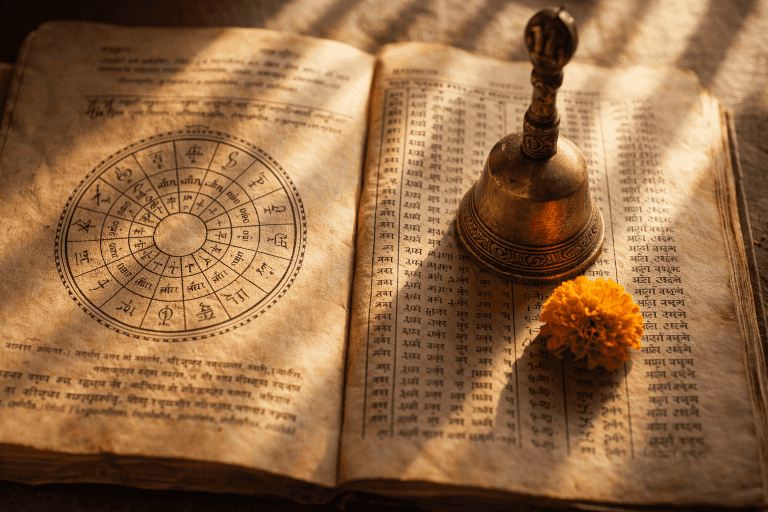
The job offer arrived during Mercury retrograde. The property registration had to fall on a Bhadra day. The wedding muhurta landed in a Mula nakshatra window. The Instagram reel said to wait for better timing.
So the waiting began. The offer expired. The registration slot was given to someone else.
Mercury retrograde ended — exactly as it always does — without any particular incident for the millions of people who simply carried on.
Inauspicious timings do not automatically ruin events in classical Jyotish (Vedic astrology). The Muhurta system (Vedic electional astrology — the classical science of selecting auspicious timing for important actions) does recognise unfavourable windows. But it does so with far more precision and context-sensitivity than social media astrology applies. The birth chart of the individual involved carries more weight than any single planetary configuration in the sky on a given day.
Do Inauspicious Timings Really Ruin Events? What Jyotish Says
Inauspicious timings in Jyotish are real but contextual — they increase the probability of friction in specific types of activities, they do not guarantee failure. Classical Vedic astrology weighs timing against the individual's natal chart (kundali), the nature of the activity and the current dasha (planetary period) before assessing whether a given moment is genuinely problematic for that person.
Three Concepts That Need Separating
The anxiety circulating on social media bundles three distinct ideas together — void of course Moon, retrograde planets and bad nakshatras — as though they are interchangeable warnings. Classical Jyotish treats each differently, and one of them is not a Jyotish concept at all.
Void of Course Moon — A Western Concept Jyotish Does Not Use
The void of course Moon is not a classical Jyotish concept. It is a term from Western horary and electional astrology describing the period after the Moon makes its last major aspect in a sign before changing signs. During this window, Western astrologers advise against initiating important actions.
Vedic astrology has no direct equivalent. The Moon's movement through the 27 nakshatras (lunar mansions — the 13°20' divisions of the zodiac used in Jyotish) is tracked continuously, and each nakshatra carries its own qualities, presiding deities and suitability for different activities. But there is no standard Vedic category called "void of course" and no classical Jyotish text prescribes avoiding action during a Moon-sign transition.
When an Instagram post warns against signing a lease because "the Moon is void of course," it is applying a Western concept to an audience largely operating in a Vedic framework. The concern may be genuine. The system being cited does not apply.
Retrograde Planets in Jyotish — Intensified, Not Broken
Retrograde planets — called Vakri Grahas (vakri meaning "crooked" or "turned back") in Sanskrit — are not simply malefic or harmful in classical Jyotish. The Brihat Parashara Hora Shastra (BPHS) describes retrograde planets as having increased strength (bala). A planet in retrograde motion is considered to cast its influence more intensely, not less effectively.
The popular interpretation — particularly around Budh Vakri (Mercury retrograde) — that communication collapses, contracts go wrong and technology breaks during these periods has no direct basis in classical Vedic texts. Mercury retrograde does draw attention to communication, contracts and information. Classical Jyotish uses this as a reason for greater care and review, not for complete postponement of all decisions.
The Mercury Retrograde Myth Specifically
Mercury (Budh) governs intellect, communication, commerce and documentation in Jyotish. When Mercury is vakri (retrograde), classical interpretation suggests heightened mental activity, a tendency to revisit or renegotiate, and the need for more careful verification of details.
A business owner who signs a contract during Budh Vakri and later discovers an error was probably insufficiently careful with the terms — not punished by planetary mechanics. The retrograde period asks for more attention, not paralysis. The detailed examination of whether Budh Vakri is really as dramatic as it is portrayed traces exactly what the classical framework says versus what the social media version has amplified.
Inauspicious Nakshatras — When the Classical System Is Specific
Here classical Jyotish does have genuine caution — but with far more specificity than "this nakshatra is bad."
The Gandanta nakshatras (the junction points between water and fire signs in the zodiac — specifically the junctions of Ashlesha-Magha, Jyeshtha-Mula and Revati-Ashwini) are considered sensitive points, particularly for births. Mula nakshatra (the 19th nakshatra, associated with Nirrti, the deity of dissolution) is traditionally considered inauspicious for certain events like marriages and housewarmings — not universally, but for specific categories of activity.
Vishti Karana — also called Bhadra — is one of the 11 karanas (half-day divisions of the lunar calendar) in the panchang (Vedic almanac). Bhadra is genuinely avoided for auspicious new beginnings in classical Muhurta practice. This is a real and classical consideration — unlike the void of course Moon.
The critical distinction is that these concerns are activity-specific. Bhadra is inauspicious for weddings and new ventures. It does not render every action taken that day harmful. A sarkari naukri (government job) employee attending a routine meeting during Bhadra has nothing to worry about.
The Muhurta System — Where Vedic Timing Wisdom Actually Lives
The Muhurta system (Vedic electional astrology) is the classical framework for selecting auspicious timing and it is genuinely sophisticated. The Muhurta Chintamani — a classical text dedicated entirely to auspicious timing — weighs multiple factors simultaneously: the tithi (lunar day), vara (weekday), nakshatra (lunar mansion), yoga (a combined Sun-Moon calculation) and karana (half-day division). All five must be assessed together — no single factor is decisive in isolation.
This is the system worth understanding before postponing a business launch or a property registration. Today's Panchang with tithi, nakshatra and karana details gives a real-time view of these five factors — the actual classical inputs for timing assessment — rather than a single retrograde status.
The Muhurta system also weighs the individual's natal chart. A timing that is generally inauspicious may be perfectly adequate for someone whose personal dasha and natal planetary strength overrides the general caution. Timing is never assessed in isolation from the person for whom it is being assessed.
The same principle applies to solar and lunar eclipses, which carry their own set of traditional cautions. The gap between classical caution and modern anxiety around those events is explored in Are Eclipses Really Inauspicious? Astronomy vs Astrology Explained.
Why Timing Anxiety Has Grown So Sharply
The spike in timing anxiety has a straightforward explanation: short-form content rewards certainty and alarm more than nuance.
A reel that says "Mercury is retrograde — do not sign anything this month" is shareable. A reel that says "Mercury retrograde intensifies mental activity and warrants careful review of contracts, particularly if your natal Mercury is in Gemini or Virgo and your current dasha activates the 3rd or 6th house" is accurate but unwatchable.
Psychology reinforces the pattern. Once a belief about timing takes hold, confirmation bias selects the evidence that supports it. Every problem that occurs during a retrograde period is attributed to Mercury. Every smooth week is forgotten. The retrograde accumulates a reputation it did not earn through any classical framework.
The practical consequence is decision paralysis in situations where delay itself carries a cost — expired offers, lost opportunities, relationships strained by unnecessary postponement.
Frequently Asked Questions
Q: Does Mercury retrograde really cause problems in daily life? A: Not automatically. In classical Jyotish, Vakri Grahas (retrograde planets) are considered stronger, not weaker or harmful. Mercury retrograde calls for more careful review of communication and contracts — it does not warrant avoiding all decisions for weeks at a time.
Q: Is the void of course Moon a Vedic astrology concept? A: No. The void of course Moon is a Western astrology concept with no direct equivalent in classical Jyotish. Vedic astrology tracks the Moon through 27 nakshatras continuously and assesses each for activity-specific suitability — it does not use void of course as a standard category.
Q: Which nakshatras are actually inauspicious in Vedic astrology? A: The Gandanta nakshatras (junction points of Ashlesha-Magha, Jyeshtha-Mula and Revati-Ashwini) and Mula nakshatra are considered sensitive for specific activities like marriages and new beginnings. Inauspiciousness is always activity-specific in classical Jyotish — not a blanket warning for the entire day.
Q: What is Bhadra and should events be avoided during it? A: Bhadra (also called Vishti Karana) is one of the 11 half-day divisions of the lunar calendar in the panchang. It is genuinely avoided for auspicious new beginnings in classical Muhurta practice. However, it does not make routine activities harmful — only specific categories like weddings and business inaugurations are traditionally deferred.
Q: How does classical Jyotish actually determine auspicious timing? A: The Muhurta system assesses five factors simultaneously — tithi (lunar day), vara (weekday), nakshatra, yoga and karana — weighted against the individual's natal chart and active dasha. No single factor is decisive in isolation. This is a far more nuanced framework than tracking one planet's retrograde status.
Timing, Anxiety and the Difference Between Caution and Paralysis
Classical Vedic astrology has a sophisticated timing science. It was built for a different purpose than the one it is being used for today.
The Muhurta system was designed to identify genuinely favourable windows for high-stakes, irreversible events — marriages, consecrations, coronations, the founding of towns. It was not designed to make people anxious about signing a work email during a retrograde or scheduling a meeting on a Mula nakshatra day.
The distinction the classical system draws is between caution applied with precision and anxiety applied without limit. One makes timing a tool. The other makes it a cage. The cage was never part of the original design.
Tags: