


Are Horoscopes Really Accurate? What They Are Meant to Do
Horoscopes are widely read, but many people wonder how accurate they really are. Understanding how horoscopes are written can help clarify what they are—and what they are not.
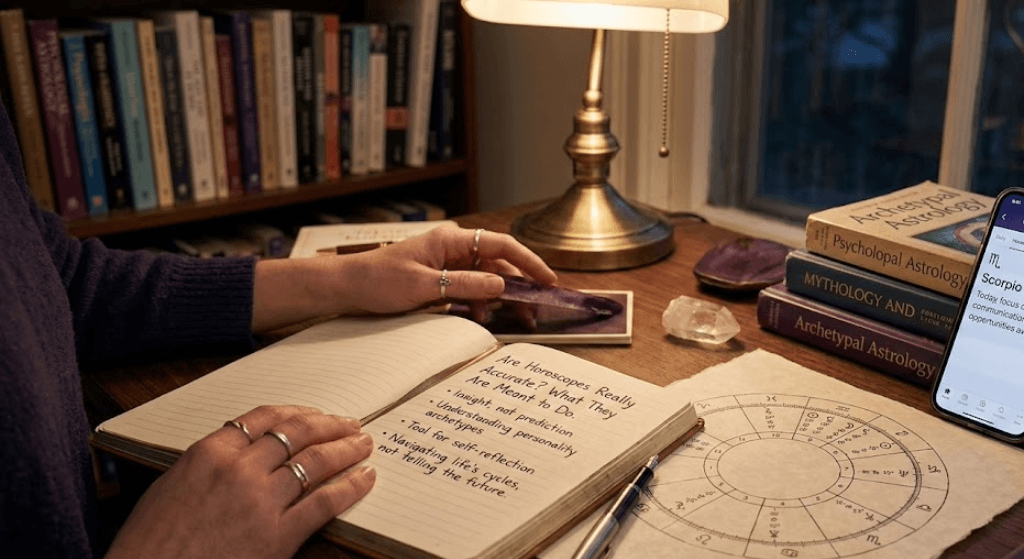
Millions of people read horoscopes every day. Some read them casually over morning coffee, while others treat them as a way to think about the day ahead.
At the same time, skeptics often question how one paragraph could apply to millions of people born under the same zodiac sign.
The answer lies in understanding how horoscopes are designed.
Myth: Horoscopes Predict Exact Daily Events
Horoscopes rarely aim to predict specific events. Instead, they often describe general themes such as communication, focus, creativity, or emotional awareness.
Because they are written for large audiences, horoscope writers must keep their language broad enough to apply to different situations.
A horoscope that encourages patience, for example, could resonate with someone dealing with workplace pressure or someone navigating family discussions.
Myth: Horoscopes Use Only One Planet
Many readers assume horoscopes rely only on sun signs. In reality, some horoscope writers consider broader planetary movements when crafting general forecasts.
These planetary patterns are interpreted symbolically rather than literally. The goal is to highlight themes rather than dictate events.
Myth: If a Horoscope Feels Accurate, It Must Be Fate
When readers relate strongly to a horoscope, it may feel as if it predicted their exact situation.
In reality, people often interpret general advice in ways that match their own experiences. Psychologists sometimes call this the “personal relevance effect,” where broad statements feel personal because individuals apply them to their lives.
This does not necessarily mean astrology is controlling events—it may simply mean the message resonates with current circumstances.
Myth: Horoscopes Should Work the Same for Everyone
Because horoscopes are written for broad audiences, they are not intended to describe every individual’s experience.
Some readers enjoy them as daily reflections, while others treat them as cultural tradition or entertainment.
Understanding this helps set realistic expectations.
Conclusion
Horoscopes are best understood as general reflections rather than precise predictions. They may offer moments of pause, encouragement, or perspective.
Whether someone reads them seriously or casually, their value often lies in prompting a moment of reflection rather than forecasting exact outcomes.
Tags: