


Shardiya Navratri 2026: Check Start and End Dates, Puja Timings and Dussehra Date
Shardiya Navratri 2026 will begin on October 11 with Ghatasthapana and Maa Shailputri Puja and continue for nine days. Devotees will worship the nine forms of Maa Durga during the festival, with Durga Ashtami and Maha Navami on October 19 and Vijayadashami (Dussehra) on October 20.
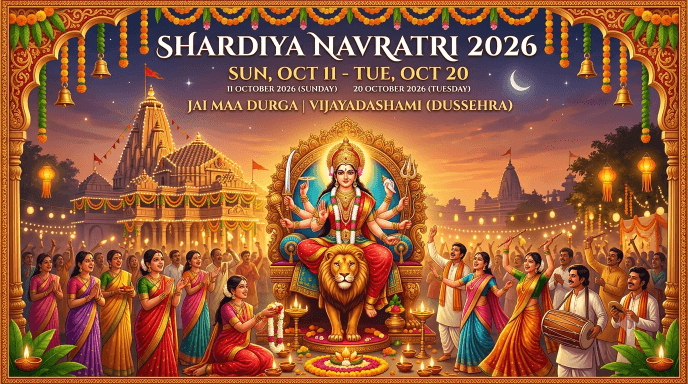
Shardiya Navratri 2026 will begin on Sunday, October 11, with Ghatasthapana (Kalash Sthapana) and Maa Shailputri Puja. The nine-day festival dedicated to the nine forms of Goddess Durga will continue through October 19, with Vijayadashami (Dussehra) falling on Tuesday, October 20.
Shardiya Navratri, also known as Maha Navratri, is observed during the Hindu month of Ashwin and is one of the most significant festivals dedicated to Goddess Durga and Shakti. The festival begins with Pratipada Tithi and concludes with Vijayadashami on the tenth day.
Shardiya Navratri 2026 Start and End Date
According to the 2026 Hindu calendar, Shardiya Navratri will start on October 11, 2026, which is a Sunday. The first day will be marked by Ghatasthapana and the worship of Maa Shailputri, the first form of Navdurga.
The nine-day Navratri observance will culminate with Durga Ashtami and Maha Navami-related rituals on October 19. The festival will conclude with Vijayadashami or Dussehra on October 20.
Shardiya Navratri 2026: Complete Date-Wise Puja Calendar
| Date | Day | Puja / Festival |
|---|---|---|
| October 11, 2026 | Sunday | Ghatasthapana, Maa Shailputri Puja |
| October 12, 2026 | Monday | Maa Brahmacharini Puja |
| October 13, 2026 | Tuesday | Maa Chandraghanta Puja |
| October 14, 2026 | Wednesday | Maa Kushmanda Puja |
| October 15, 2026 | Thursday | Maa Skandamata Puja |
| October 16, 2026 | Friday | Maa Katyayani Puja |
| October 17, 2026 | Saturday | Maa Kalaratri Puja |
| October 18, 2026 | Sunday | Maa Mahagauri Puja |
| October 19, 2026 | Monday | Durga Ashtami, Mahagauri Puja, Maha Navami/Sandhi Puja |
| October 20, 2026 | Tuesday | Vijayadashami (Dussehra), Durga Visarjan |
October 11: Ghatasthapana and Maa Shailputri Puja
The first day of Shardiya Navratri is marked by Ghatasthapana, also known as Kalash Sthapana. It symbolically marks the beginning of the Navratri worship.
Devotees establish the sacred kalash at their homes or places of worship and begin the nine-day Navratri rituals. Maa Shailputri, considered the first form of Navdurga, is worshipped on Pratipada.
The exact Ghatasthapana Muhurat varies according to location, as Hindu Panchang timings depend on the local sunrise and geographical location. For example, the published 2026 Panchang for Jodhpur gives a Ghatasthapana Muhurat of 6:35 AM to 10:28 AM on October 11.
Navdurga: The Nine Divine Forms of Goddess Durga
During Shardiya Navratri, devotees worship nine sacred manifestations of Goddess Durga, known as Navdurga. Each day of the nine-day festival is dedicated to one form of the Goddess:
- Day 1 – Maa Shailputri: The first form of Durga, symbolising strength, purity and devotion.
- Day 2 – Maa Brahmacharini: Representing penance, patience and spiritual wisdom.
- Day 3 – Maa Chandraghanta: Known for courage, peace and protection from negativity.
- Day 4 – Maa Kushmanda: The Goddess associated with energy, prosperity and cosmic creation.
- Day 5 – Maa Skandamata: The mother of Lord Kartikeya, symbolising motherhood and compassion.
- Day 6 – Maa Katyayani: A powerful form of Durga, representing courage and the triumph of good over evil.
- Day 7 – Maa Kalaratri: The fierce form of the Goddess who protects devotees and destroys evil forces.
- Day 8 – Maa Mahagauri: Symbolising purity, peace, serenity and spiritual strength.
- Day 9 – Maa Siddhidatri: The final form of Navdurga, associated with divine blessings, wisdom and spiritual accomplishments.
Shardiya Navratri is dedicated to Goddess Durga and the divine feminine power, or Shakti. Devotees observe fasts, perform daily prayers, visit temples and participate in religious and cultural celebrations during the nine-day period.
Tags: